
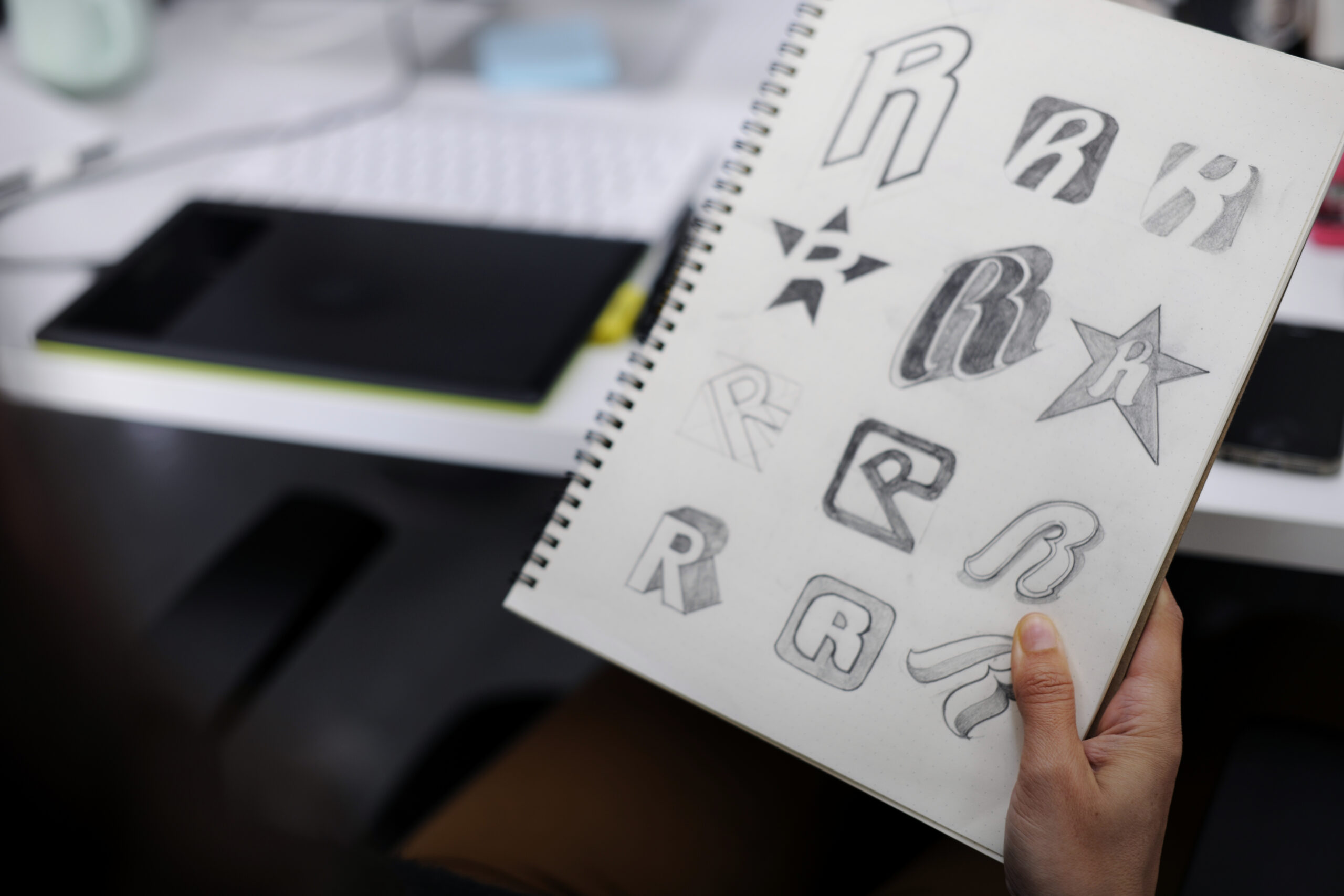
Mobile-first branding has become the default reality for modern businesses, not a future trend. A logo is no longer judged on a large billboard or printed brochure alone. It is constantly compressed into tiny digital environments like Instagram profile icons, website headers on smartphones, app thumbnails, browser tabs, and marketplace listings. In these spaces, even a slightly complex design can break down visually and lose recognition value.
This raises a serious design question that many businesses overlook until it is too late: will your logo still be clear, readable, and recognizable when it is reduced to a very small size on a mobile screen?
A logo that fails at small scale does not just look bad. It weakens brand recall, reduces trust, and creates inconsistency across digital platforms. That is why scalable logo design has become one of the most important principles in modern branding.
Why small size performance matters more than ever
The average user now interacts with brands primarily through mobile devices. Whether someone is browsing services, checking reviews, or clicking through social media, the first visual contact point is often a small icon or compressed logo.
At small sizes, the human eye cannot process fine details, thin strokes, complex gradients, or tightly packed typography. What looks elegant on a desktop header can turn into a blurred shape or unreadable mark on a smartphone screen.
A strong logo must remain identifiable even when reduced to 24 to 48 pixels. If it does not, the brand risks losing visibility at the exact moment where most users first encounter it.
Common reasons logos fail on mobile screens
Many logos look strong in presentations but fail in real-world digital environments due to a few recurring design issues.
One major issue is excessive detail. Intricate illustrations, decorative lines, and layered symbols often collapse into noise when scaled down. Instead of a recognizable mark, the viewer sees a smudge or unclear shape.
Another issue is thin typography. Fonts with light weights may appear elegant on large displays but disappear on mobile icons. The thinner the stroke, the higher the risk of visual loss.
Color dependency is another problem. Some logos rely heavily on gradients or multiple colors to communicate identity. When compressed, these gradients blend together and lose contrast, making the logo harder to distinguish.
Overly long wordmarks also struggle at small sizes. If the text is wide and tightly spaced, it becomes unreadable when scaled down, especially in favicon or app icon formats.
Finally, poor spacing and lack of simplified alternate versions can make a logo rigid and non-adaptive. Modern branding requires flexible logo systems, not a single fixed graphic.
The principle of scalability in logo design
Scalability refers to how well a logo maintains clarity and recognition across different sizes and formats. A scalable logo works equally well on a billboard, a website header, a mobile app icon, or a social media profile image.
The foundation of scalability lies in simplicity and structure. Strong geometric forms, clean typography, and balanced spacing allow the logo to shrink without losing identity.
Designers often test scalability by reducing a logo to its smallest usable size. If it becomes unrecognizable or visually noisy, it fails the scalability test.
A scalable logo is not necessarily minimal for the sake of style. It is intentionally structured so that its core identity remains intact regardless of size.
What makes a logo mobile friendly
A mobile friendly logo is designed with digital compression in mind. It anticipates how the design will behave in constrained spaces.
One key factor is strong silhouette recognition. Even without color or text, the shape of the logo should be identifiable. This is what allows users to recognize the brand instantly, even at a glance.
Another factor is controlled detail. Instead of adding complexity, effective logos prioritize bold shapes and clear separation between elements.
Typography must also be carefully chosen. Sans serif fonts or custom letterforms with slightly heavier weight tend to perform better in small sizes.
Contrast plays a major role as well. High contrast between background and foreground ensures the logo does not fade visually when reduced.
Finally, mobile friendly logos often include simplified variants. Many modern brands use a full logo for desktop and a condensed icon version for mobile applications.
How to test your logo for small screen performance
Before finalizing a logo, it should always be tested in realistic digital environments.
Start by scaling the logo down to favicon size, typically 16 by 16 pixels. If any detail becomes unclear, the design needs refinement.
Next, test it as a social media profile image. Platforms like Instagram and Facebook crop logos into circular or square frames, which can affect visibility and composition.
Another important test is mobile website headers. A logo should remain clear even when placed in a responsive navigation bar where height is limited.
It is also useful to test the logo in grayscale. This removes color influence and reveals whether the shape alone is strong enough to communicate identity.
Finally, evaluate it on different screen brightness levels. A logo that only works under ideal conditions is not reliable in real-world usage.
The role of professional logo design in scalability
Scalable branding is not achieved by chance. It requires deliberate design thinking, technical knowledge of digital formats, and experience in visual hierarchy.
Professional designers build logos using vector-based systems so that the design remains sharp at any size. They also consider modular variations, ensuring that businesses have alternate versions for different use cases.
A strong design process also includes iterative testing, where the logo is evaluated across multiple platforms before final approval. This ensures that the brand identity remains consistent from print to mobile.
Businesses that skip this step often end up redesigning their logos later, which creates inconsistency and weakens brand recognition.
Why mobile optimization impacts brand trust
Users subconsciously associate visual clarity with professionalism. If a logo appears blurry, unreadable, or inconsistent across platforms, it can negatively impact how trustworthy a brand feels.
On the other hand, a clean and scalable logo creates an impression of stability and attention to detail. Even before reading any text, users form an opinion based on visual clarity alone.
This is why large brands invest heavily in refining their logo systems for digital environments. They understand that small screen performance directly influences brand perception.
How Logo Wizardz approaches scalable logo design
At Logo Wizardz, scalability is treated as a core design principle rather than an afterthought. Every logo is developed with mobile responsiveness, multi-platform adaptability, and long-term brand consistency in mind.
The focus is on creating logos that remain strong whether they are displayed on a large website banner or a small mobile icon. This includes careful attention to typography, spacing, silhouette strength, and simplified alternate versions.
Each design is tested across digital scenarios to ensure clarity at reduced sizes. The goal is not only to create visually appealing logos but to build brand assets that perform reliably in real-world usage.
For businesses that want to strengthen their identity and ensure visibility across all digital platforms, this approach helps eliminate future redesign costs and branding inconsistencies.
For inquiries or consultations, Logo Wizardz can be reached at (917) 818-3450.
The long-term value of a scalable logo system
A scalable logo is an investment in brand longevity. It reduces the need for redesigns, ensures consistency across evolving platforms, and strengthens recognition over time.
As digital environments continue to shift toward mobile-first experiences, logos that fail to adapt will slowly lose visibility. In contrast, adaptable and well-structured logo systems continue to perform regardless of platform changes.
Businesses that prioritize scalability early gain a significant advantage. Their brand remains clear, consistent, and recognizable in every customer interaction.
Final thoughts
Small screen performance is no longer a secondary consideration in branding. It is a defining requirement. A logo that works only on large formats is incomplete in today’s digital landscape.
Every element of a logo, from typography to spacing to structural simplicity, must support clarity at reduced sizes. When done correctly, a logo becomes more than a visual mark. It becomes a flexible identity system that works everywhere your audience interacts with your brand.
For businesses aiming to build a strong and future-ready identity, focusing on scalable logo design is one of the most effective steps they can take.